

When maple syrup dreams turned sour!
In mid-2014, while comfortably employed, I felt a growing urge for a new adventure. As I scrolled through social media, I found myself drawn to the experiences of friends living in Canada.This, coupled with a desire for a fresh start, prompted me to explore immigration options.
My research led me to an HR Assistant position advertised for a prominent Canadian automotive company (Company X, for anonymity purposes). My skills closely aligned with the requirements, and I was swiftly shortlisted for an interview. However, upon closer examination, several red flags emerged. The interview itself was unusually brief, lasting only 15 minutes. Additionally, the offer of employment was made immediately following the interview, which deviates from standard hiring practices.The offer letter, while seemingly official, contained a particularly suspicious detail: a substantial “visa processing fee” of $20,000. This exorbitant cost fueled my skepticism.
Determined to verify its legitimacy, I started fact-finding. A quick search revealed the Company X address didn’t exist (strike one). Comparing it to the real address revealed a clear discrepancy (strike two). Finally, a call to the provided Canadian number confirmed my fear that there was no one by the recruiter’s name working for Company X. It was a scam!
While disappointed, this experience highlighted the importance of due diligence when considering job offers, particularly those promising work visas. Here are some key takeaways:
- Be wary of offers that seem too good to be true, especially those with a quick interview process or immediate job offers.
- Research the company and verify the legitimacy of the contact information provided.
- Never pay upfront fees for visas or immigration processing.
- If offered a job in Canada, consult with a licensed immigration professional to ensure the legitimacy of the opportunity.
To better equip you to identify fraud and safeguard yourself from financial loss or emotional distress, let’s dig deeper into LMIAs and Work permits.
In our last blog post, we delved into a comprehensive understanding of the Labour Market Impact Assessment (LMIA) process, exploring its definition, requirements, types and more. It is highly recommended to peruse that piece prior to delving into this one, as it provides essential context for grasping the intricacies of LMIA job offer authentication in Canada.
The Loopholes and the reasons for rise of LMIA fraud:
Canada’s immigration system offers a path to a brighter future for many, but loopholes and weak enforcement are creating a dark side: LMIA fraud. Let’s break down the key reasons this scheme is thriving:
1. Weak Penalties and Lack of Enforcement:
Government agencies like IRCC (Immigration, Refugees and Citizenship Canada), CBSA (Canada Border Services Agency), and ESDC (Employment and Social Development Canada), tasked with tackling the issue, just aren’t throwing enough punches. They have failed to address issues and the penalties are primarily administrative fines. These fines might not be a strong enough deterrent for employers or consultants willing to take a risk for significant financial gains.
2. Lucrative Scheme for All Parties:
The system creates a perverse incentive for all parties involved to cheat. Employers get cheap labor, consultants rake in fees, and immigrants get a supposed shortcut to permanent residency. This “everyone wins” mentality fuels the fraud.
3. Conflicted Consultants and Hidden Fees:
Some consultants might pressure employers to bypass qualified Canadians or permanent residents in favor of immigrants willing to pay inflated fees for work permits and immigration services. The LMIA processing cost might be reasonable, but consultants can inflate the overall cost through unnecessary eligibility assessments and markups, making it especially burdensome for immigrants.
4. Employer Leverage and Power Imbalance:
Employers hold significant power in the LMIA process. Since an LMIA is crucial for obtaining or extending a work permit, which is a key step towards permanent residency, employers can exploit this leverage:
- They might collude with corrupt consultants to underpay foreign workers and take a portion of their wages as a kickback.
- They might disregard qualified Canadian or permanent resident candidates who wouldn’t pay inflated fees associated with the job offer.
5. Desperation of Immigrants Seeking Permanent Residency:
The desire for permanent residency can make immigrants vulnerable. In their desperation to immigrate, they might be willing to pay inflated fees to consultants for LMIA processing and immigration services. They might accept underpayment from employers who exploit their desire for permanent residency.
These factors create a breeding ground for LMIA fraud. The lack of strong penalties, combined with the potential financial gains for all parties involved, incentivizes some employers and consultants to exploit the system. The power imbalance between employers and immigrants further strengthens the appeal of fraud for some.
How do you identify a fake job offer and LMIA?
When it comes to job offers, skepticism can be your best ally. Scammers often prey on the eagerness of job seekers, especially those seeking opportunities in Canada.
They might also furnish you with a bogus employment and LMIA letter to streamline their procedures and to include it in your Canadian visa application. As a result, your application could be denied, and you may face a five-year prohibition for misrepresentation.
Here are some red flags to watch out for when evaluating a Canadian job offer letter:
- Mandatory Payment or Training Fees: Legitimate Canadian recruiters or employers will never ask for money in exchange for a job offer. Avoid any requests for payment to secure a job or for mandatory training.
- False Promises: No one can guarantee your entry to Canada or the issuance of a work permit except Immigration, Refugees, and Citizenship Canada (IRCC). Be cautious of anyone promising guaranteed entry or work permits.
- Written Proof of Job Offer: A genuine job offer should always be provided in writing. If you’re offered a job over the phone without receiving a written offer letter, it’s likely a scam. Similarly, if you receive a job offer for a position you didn’t apply for or interview for, it’s likely a scam. Exercise caution and verify the legitimacy of the offer before proceeding.
- Misspellings or Grammatical Errors: Be wary of job offer letters containing spelling or grammar mistakes. Genuine job offers from reputable companies will typically be free of such errors.
- Lack of Details: A legitimate job offer letter should include essential information such as job duties, hours of work, rate of pay, location, and conditions of employment. If any of these details are missing or vague, proceed with caution.
- Absence of LMIA or Employment Number: For certain types of work permits, you may need a Labour Market Impact Assessment (LMIA) or an employment number. Ensure that your job offer includes all necessary information for your work permit application.
- Suspicious Email Addresses: Genuine job offer emails are unlikely to come from personal or free email addresses. Be cautious of emails from unknown sources or addresses that seem suspicious.
- No Interviews or Experience Needed: Be wary of job offers that claim no interviews or experience are required, especially if the salary offered seems too good to be true. Legitimate employers typically conduct interviews and require relevant experience for positions.
- Conduct a Simple Search: Take the time to research the company offering the job. Check for a company website, online reviews, and business registry information to verify its legitimacy.
By remaining vigilant and scrutinizing job offers carefully, you can protect yourself from falling victim to job offer scams in Canada. If you encounter any suspicious activity or offers, report them to the appropriate authorities.
How to spot LMIA letters that are not genuine?
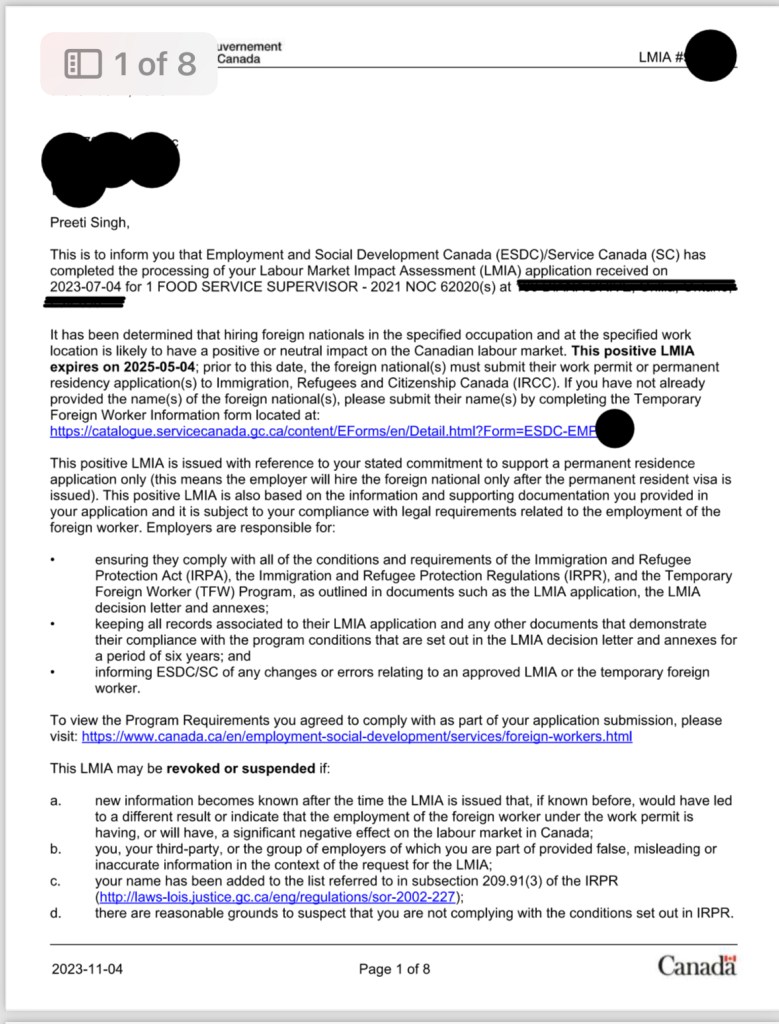
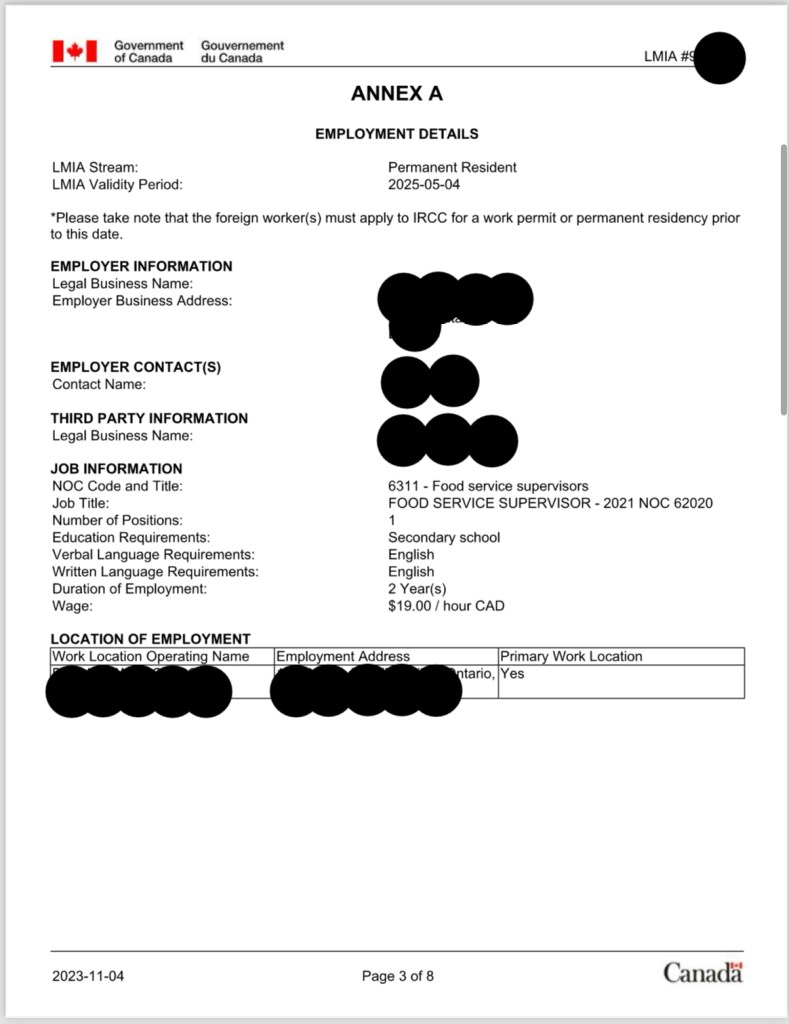
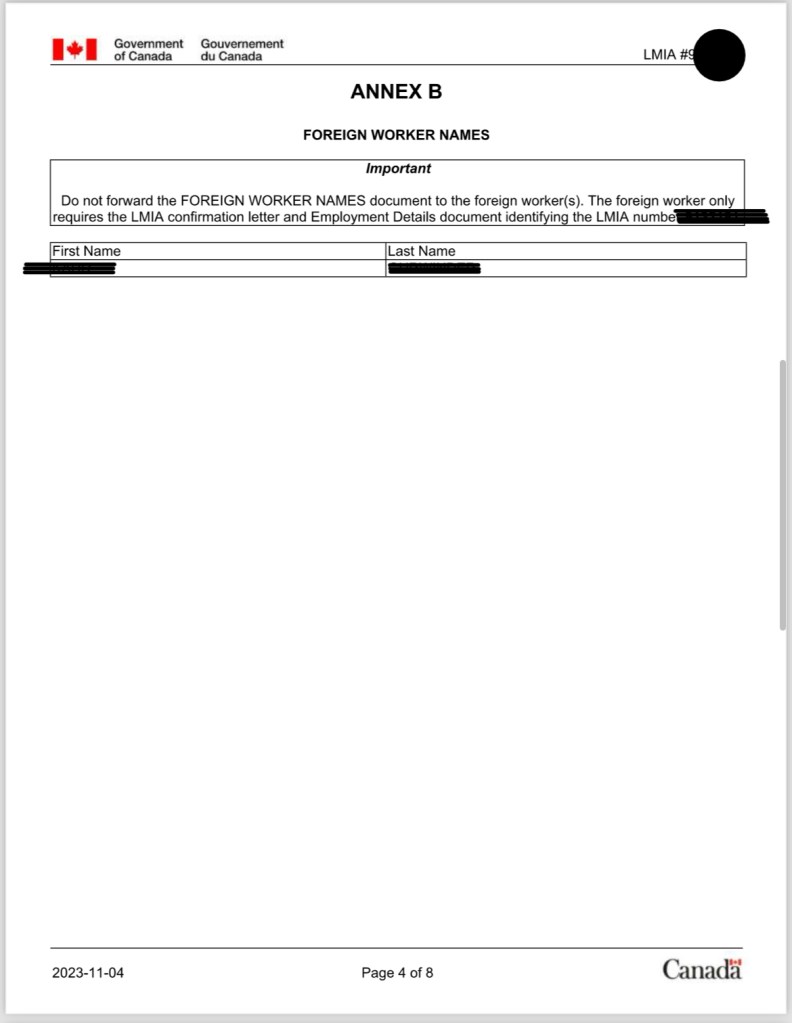
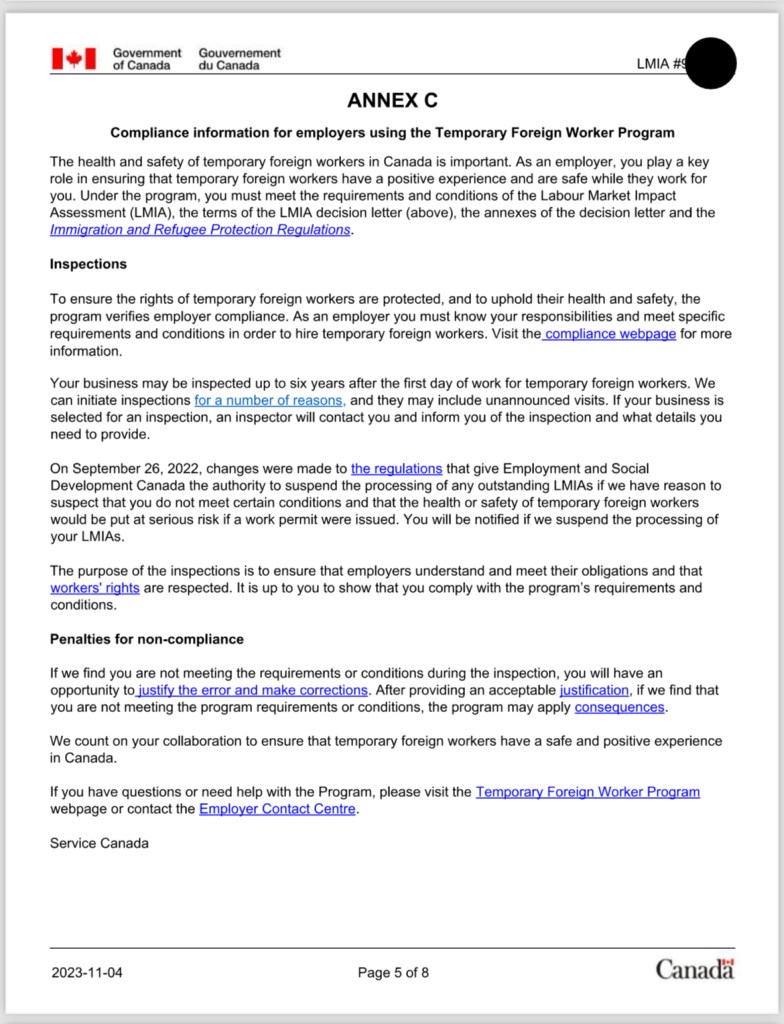
Before you trust an LMIA letter, see what a real one looks like. We’ve included pictures to help you spot discrepancies and some tips on how to read an LMIA letter to identify potential red flags:



1. Verify the Source:
- LMIA letters are issued by Employment and Social Development Canada (ESDC). Ensure the letterhead and contact information on the letter match those of ESDC. You can find them on the official ESDC website.
2. Check the Details:
- The letter should clearly state the:
- Employer Name and Contact Information: Verify these details match the company you applied to.
- Your Name and Job Title: Ensure they are accurate.
- Job Description: This should match the description you saw in the job posting or discussed with the employer.
- Wage Offered: Compare it with the average wage for similar positions in your area. You can find resources for average wages online or through government websites.
- LMIA Number: This unique identifier can be verified on the ESDC website.
3. Look for Inconsistencies:
- Spelling or grammatical errors could indicate a fraudulent document.
- Be wary of vague or overly broad job descriptions.
- If the wage offered is significantly lower than the average, it might be a red flag.
- Watch out for unrealistic deadlines or pressure to act quickly.
4. Additional Resources:
- ESDC offers resources and information on LMIA on their website: https://www.canada.ca/en/employment-social-development/services/foreign-workers.html.
- You can also contact ESDC directly if you have any questions or concerns about your LMIA letter.
Remember: If anything seems suspicious or doesn’t match your expectations, don’t hesitate to reach out to ESDC for verification or seek professional immigration advice.
If you suspect you’ve fallen victim to immigration fraud, we prioritize addressing your concerns at ReachOut Immigrations. Please do not hesitate to contact us by phone, email or through our social media channels. Additionally, you can report immigration fraud to the Canada Border Services Agency or visit their website for more information: https://www.canada.ca/en/immigration-refugees-citizenship/services/protect-fraud.html
Get started today: If you’re eager to explore your Canadian immigration possibilities with a reliable team, take our online assessment. A member of our team will promptly reach out to assist you further.
 ReachOut Immigration Services Ltd.
Leave a comment